Well hello, September! How did that happen? I’m sitting with my laptop at the kitchen counter, a location I often pick as a nice change of scenery for writing. I watch the birds flit around the feeders outside and enjoy the sounds of morning.
It’s a telling commentary on the pace of summer that the template I’m using was originally titled “July 2026,” and I can see that it was subsequently resaved and retitled “August 2026”! Whoops. It’s been a full few months.
So here we are, a few months late. I’m full of gratitude for the clients and work that have kept me busy and energized, but with our kids back in school, the light changing around me, and football season underway, I’m wondering where the time went.
It reminds me of this line from Henry Austin Dobson that I read years ago:
“Time goes, you say? Ah no!
Alas, Time stays, we go.”
How We Spend Our Time
I’m not complaining about having a full calendar. It’s a sign of momentum, and I’m so appreciative of that. More obligations also make me more intentional about how I use my time.
As I work with more organizations, larger teams, and more complex issues, I’m also more attuned to helping others become more aware of where their time is going.
Long ago, one of my business school professors said, “Show me your financial statement, and I’ll show you your strategy.”
He meant that there’s the strategy that organizations say they follow — you know, the one in the nice PowerPoint deck that got developed at the two-day retreat, with the big vision and the “audacious goals.”
And then there’s the actual strategy they follow. You can find that strategy by tracing how money is spent.
Usually, the difference between the two is an easy roadmap for what I’ve been hired to help solve.
For example, if an organization tells me it wants to grow into new markets, but I see the marketing line is flat from one year to the next, or their cost of acquisition is flat, I know there probably hasn’t been enough effort toward that goal. If a company tells me it wants to “invest in talent,” but there’s been no increase in the training line of the budget (or worse, there is no training line in the budget at all!), I know that there’s a difference between what we say is important and what we’re showing is important.
Closing the gap is a big part of leading strategy, and leading in general.
Our Calendars Show What Is Important to Us
In the same way, I’ve come to realize that our calendars are a constant feedback mechanism for what is actually important to us. If our budgets reveal our organizational priorities, our calendars show us our operational ones.
This post is a good example. I say that writing regularly is important to me. But if I continually postpone it, my calendar is telling me something: other things were more important.
This summer, client needs almost always trumped More For Many’s own. That has been the right decision, but it’s also a reminder that reinvesting in the business requires discipline, too.
Most of the leaders I work with have calendars that are beyond jammed. Each week looks like a pile of Lego bricks, stacked on top of each other — a game of Tetris in which none of the rows ever clear out. It’s not uncommon for people to arrive on Zoom or in a room with me, and half-whisper, “I’m so sorry, but I have to run to the bathroom; I haven’t gotten up in three hours!”
It can be relentless, the steady flow of meetings and appointments to talk about work with others. But when does anyone actually do the work?
When I look more closely at organizations where everyone is busy but nothing seems to get resolved, I often find that the meetings are compensating for unclear roles, unclear goals, or both.
Making Space
Eventually, we all learn the difference between saying something is important and showing it is.
If you’re entering the final third of the year feeling like your organization hasn’t made the progress that you hoped for, here are a few ideas on how to make more space for what matters:
Designate one lead.
Often, accountabilities are really fuzzy. In their reluctance to offend anyone, leaders often confuse everyone.
The simplest way to clarify things for your team is to set one lead for each project or initiative. That doesn’t mean other people don’t have a role or don’t get to contribute; it just means one person handles arranging meetings, scheduling deliverables, and breaking ties.
Do a meeting cleanse.
Get a bit ruthless about how many meetings are on your calendar each day.
- Can they each be reduced by 15 minutes? (Often, this change alone can manufacture an extra hour in the day for every person in your organization.)
- Can they be handled via email, Teams, or Slack instead?
- Does everyone who is on the invite list need to be there?
- Can one person write not only an agenda but a set of recommendations that attendees read beforehand, so the meeting time is used only for discussion and decisions, not presentations and updates?
Revisit your strategy.
Open your strategic plan and get honest about what progress has been made and how it was made.
- Has strategic work become a part of the everyday work, or does it happen on Friday afternoons and right before major deadlines?
- When you added new priorities, what did you stop doing? Strategy is about focus, not accumulation.
- Does your plan describe how you’ll get from where you are to where you want to be, or does it simply catalog everything you already do?
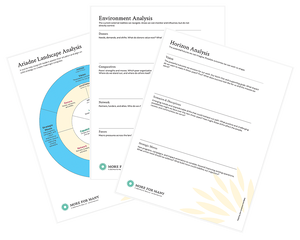
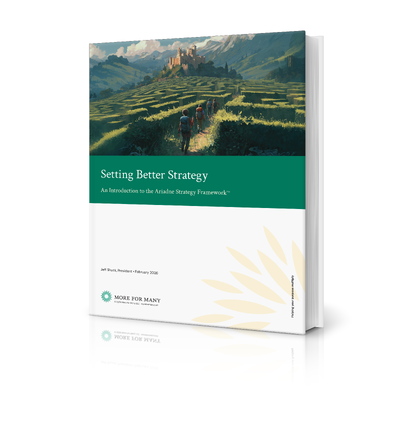
For more ideas on how to set an inspiring, differentiated strategy that your team will actually follow, download our free ebook, Setting Better Strategy.
Building Your Reputation
Another quote that found me around the same time as the quote from Dobson is this classic from Henry Ford:
“You can’t build a reputation on what you are going to do.”
We build our reputations on what we actually do, not what we talk about doing. Where do you need more time this fall to do the things you’re still just talking about?
Our time goes where we put it. I hope you put yours toward what matters most.
Happy September!





No Comments Yet
Let us know what you think